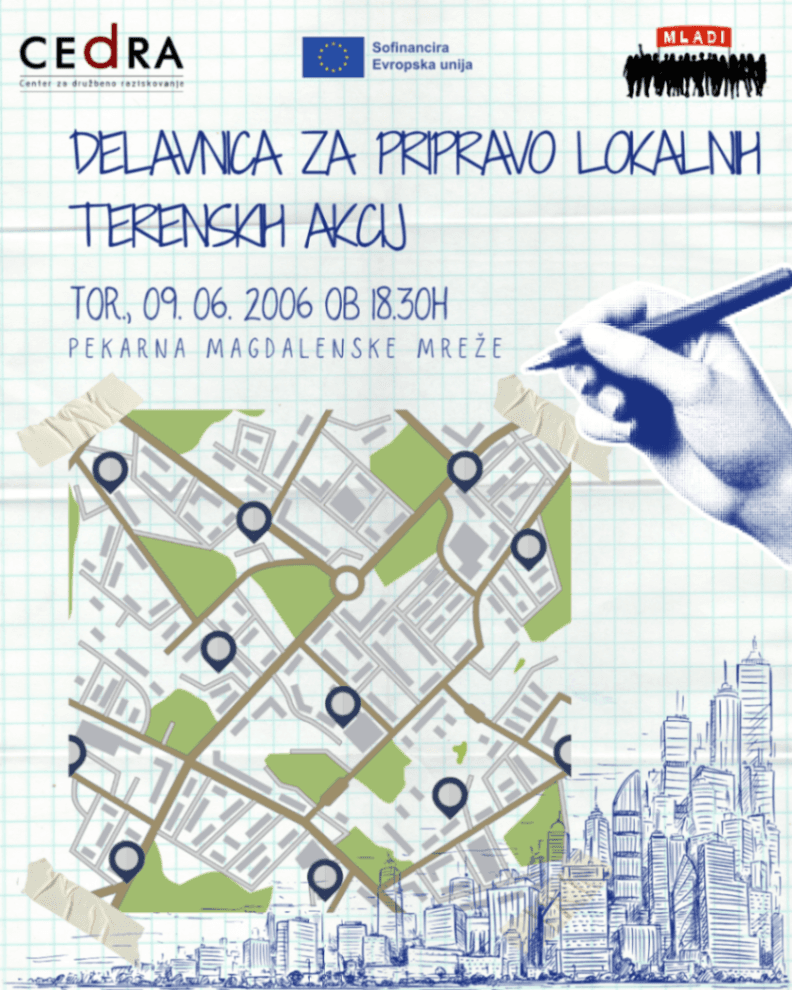
Workshop for Preparing Local Field Actions
Activity Report
Activity Report
Event Report: Workshop for Preparing Local Field Actions
Date: 14 May 2026
Context: Erasmus+ project Youth for Decent Work, the Common Good and the Environment (KA145)
Location: Pekarna Magdalenske mreže, Ob železnici 6, 2000 Maribor
1. Description of the Activity
As part of the project, we organised a workshop for preparing local field actions, designed to provide young participants with practical preparation for workplace visits and direct contact with workers. The activity was conceived as a practical continuation of the project's work on decent work, workers' rights, solidarity and collective organising.
In the first part of the workshop, participants learned about establishing contact with workers in the workplace through the presentation and exchange of experiences from trade union organising practice. They explored which topics can be useful to address and how conversations with workers can help identify problems and interests shared by a larger number of employees.
Particular attention was paid to understanding fieldwork as a process of listening, building trust and developing long-term relationships with workers. Participants discussed the difference between individual difficulties and problems that can be recognised as shared by a wider group of workers and can therefore provide a basis for collective action.
In the practical part, participants prepared for concrete workplace visits. Together, they defined the purpose of the visits, approaches to initiating contact with workers, key topics for discussion and methods for systematically recording their findings.
In the final part, participants formed field teams and divided the basic responsibilities required for preparing and carrying out the visits. They decided who would establish the initial contact, who would lead the conversation and ask questions, and who would record the key findings.
2. Purpose of the Activity
The objectives of the workshop were:
- to introduce young people to the purpose and basic methods of fieldwork,
- to present practical experiences and methods from trade union organising,
- to develop participants' ability to establish direct and respectful contact with workers,
- to develop active listening and open-ended questioning skills,
- to enable participants to distinguish between individual and shared workplace problems,
- to develop the ability to identify common interests and opportunities for collective action,
- to prepare participants practically for carrying out local field actions,
- to strengthen cooperation, responsibility and a clear division of tasks within field teams.
3. Process and Youth Participation
The workshop had a strongly practical and participatory character and was divided into several interconnected sections:
a) Introduction to Fieldwork
In the first part, we defined the purpose of fieldwork and discussed why direct contact with workers is important for understanding their working and living conditions.
We particularly emphasised that the purpose of a workplace visit is not simply to provide information, but primarily to initiate conversations, listen to workers' experiences and gradually build trust.
b) Experiences from Trade Union Organising
Participants were introduced to concrete experiences from trade union fieldwork. We discussed how to approach workers, how to initiate a conversation, which types of questions encourage people to share their experiences and how to respond to different reactions.
Using practical examples, participants considered which approaches can help create an open and respectful conversation.
c) Active Listening and Asking Questions
An important part of the workshop focused on communication skills. Participants explored the importance of open-ended questions and active listening.
We discussed how to conduct conversations in a way that enables workers themselves to describe their experiences, problems and needs, rather than providing answers in advance or assuming which issues are most important to them.
d) From Individual Difficulties to Shared Problems
Participants learned to distinguish between the individual difficulties experienced by a particular worker and problems that recur among a larger number of employees.
Particular attention was paid to how recurring problems and shared interests can be identified through multiple conversations and how such findings can provide a basis for further connection and collective action.
e) Preparing Concrete Workplace Visits
In the practical part of the workshop, participants planned concrete workplace visits. They defined the purpose of each visit, approaches to initiating contact with workers and the key questions they wanted to address.
Together, we developed a basic framework for field conversations and a method for recording information that would enable subsequent collective analysis of the findings.
f) Forming Field Teams and Dividing Responsibilities
In the final part, participants formed smaller field teams and divided basic roles and responsibilities within each group.
They decided who would establish the initial contact with workers, who would lead the conversation and ask questions, and who would be responsible for recording the key findings.
This division of responsibilities enabled participants to translate their theoretical and practical preparation directly into a plan for concrete collective action.
4. Achieved Results
The activity was evaluated through a questionnaire and group reflection. Participants assessed their understanding of the purpose of fieldwork, the usefulness of experiences from trade union practice, their preparedness for direct contact with workers, their ability to identify shared problems and the usefulness of working in field teams.
The average scores on a five-point scale were:
- understanding of the purpose of fieldwork: 4.5 / 5,
- usefulness of experiences from trade union practice: 4 / 5,
- preparedness for workplace visits: 4.2 / 5,
- understanding of how to identify shared problems: 4.5 / 5,
- usefulness of working in field teams: 4.2 / 5.
Participants particularly highlighted the practical presentation of trade union fieldwork and the preparation of a concrete approach for conversations with workers.
An important insight was that fieldwork is not simply about providing information, but primarily about listening, building trust and identifying problems that workers experience as shared. Participants also emphasised the importance of thorough preparation, a clear division of responsibilities within the group and systematic recording of findings.
An important outcome of the activity was the participants' direct preparation for the next phase of the activities – carrying out workplace visits and engaging in direct conversations with workers.
The activity therefore contributed to:
- a better understanding of the purpose and methods of fieldwork,
- greater preparedness for direct contact with workers,
- the development of active listening and conversation skills,
- an improved ability to identify shared problems and interests,
- an understanding of the importance of trust and long-term relationship-building,
- the practical preparation of field teams and a clear division of responsibilities.
5. Learning Outcomes and Contribution to the Project Objectives
The workshop made an important contribution to the project objectives by enabling young people to move from a theoretical understanding of decent work, workers' rights and collective organising towards the practical development of skills required for active participation in their local communities.
In terms of knowledge, participants gained or deepened their:
- knowledge of how to prepare and carry out workplace visits,
- understanding of the distinction between individual and shared workplace problems,
- understanding of the importance of building trust and developing long-term relationships with workers,
- knowledge of the basic steps involved in preparing a local field action,
- understanding of the importance of systematically collecting and analysing findings from fieldwork.
In terms of skills, participants developed their ability to:
- establish initial contact and conduct conversations with workers,
- ask open-ended questions and practise active listening,
- identify shared problems and interests,
- record and collectively analyse findings from fieldwork,
- plan concrete field activities,
- cooperate and take on different roles within a group.
In terms of attitudes and behaviour, the activity contributed to:
- greater confidence in establishing direct contact with workers,
- greater willingness to participate actively in local field actions,
- the development of a responsible and respectful approach towards the people they engage with,
- greater awareness of the importance of listening and building trust,
- a stronger sense of solidarity and collective action,
- greater willingness to take responsibility within group activities.
The workshop therefore directly supported the participatory dimension of the Erasmus+ project Youth for Decent Work, the Common Good and the Environment. Participants moved beyond learning about and discussing social issues and began preparing practically for active engagement in their local environment, direct contact with workers and identifying opportunities for shared and collective action.