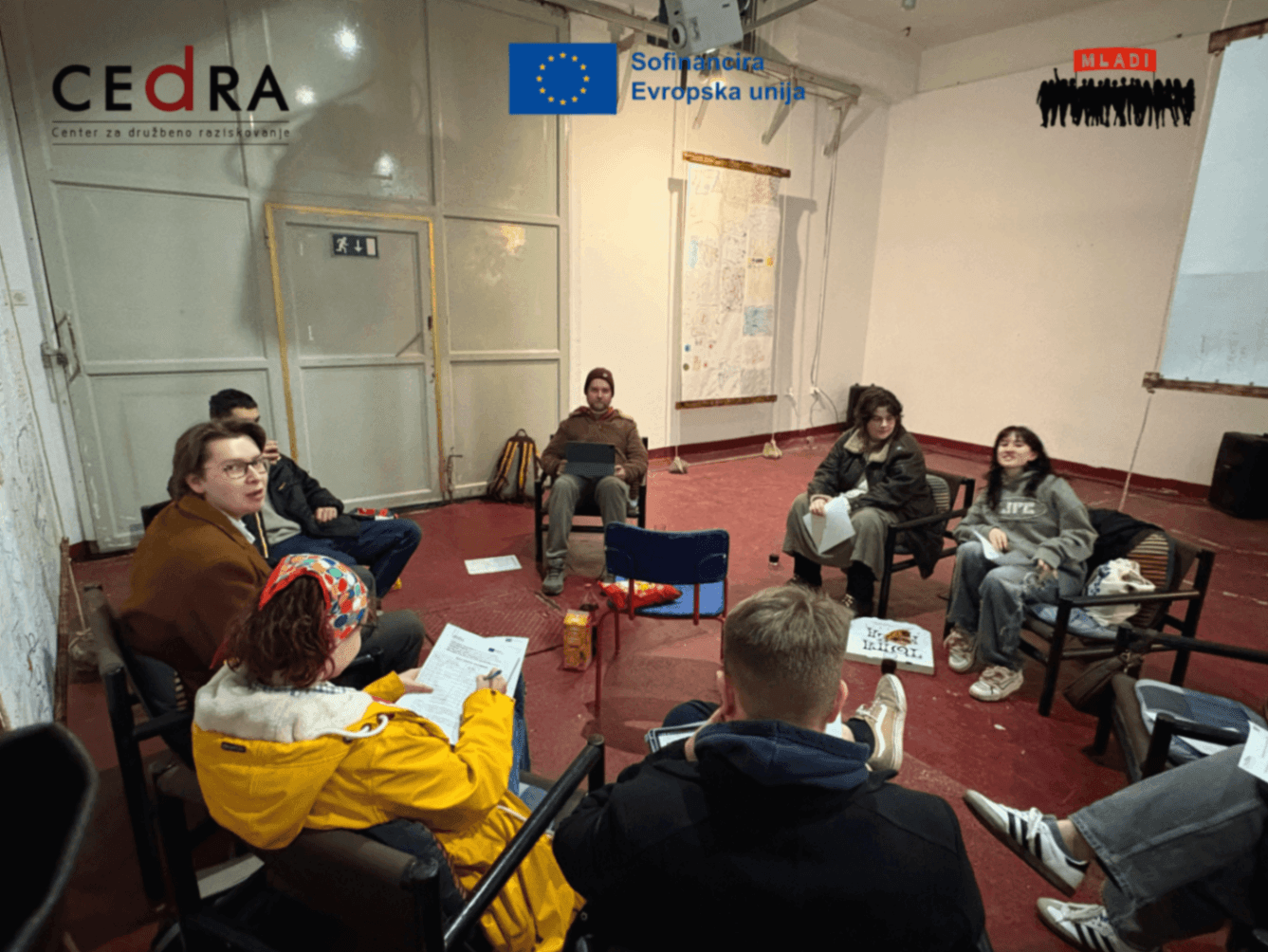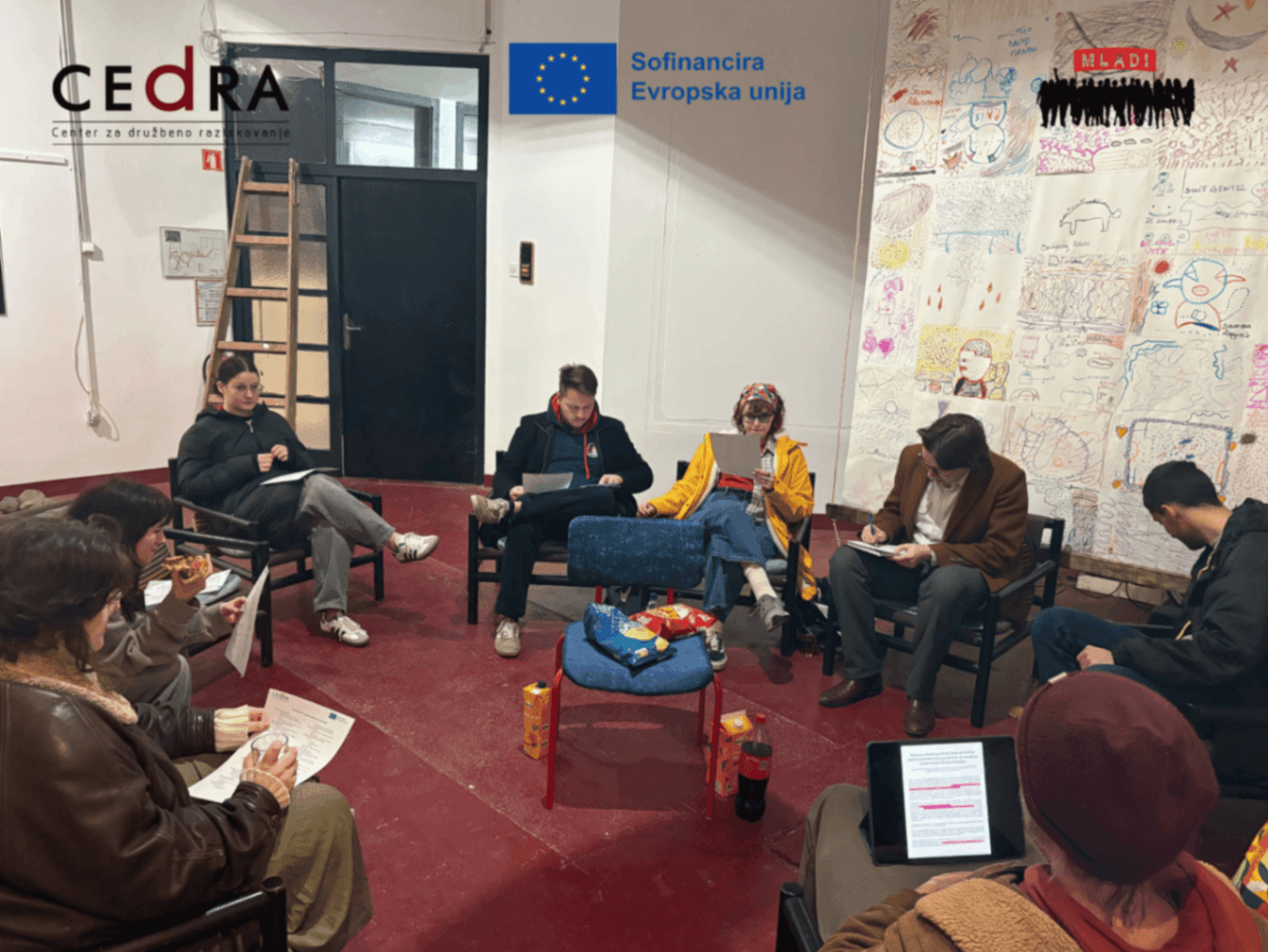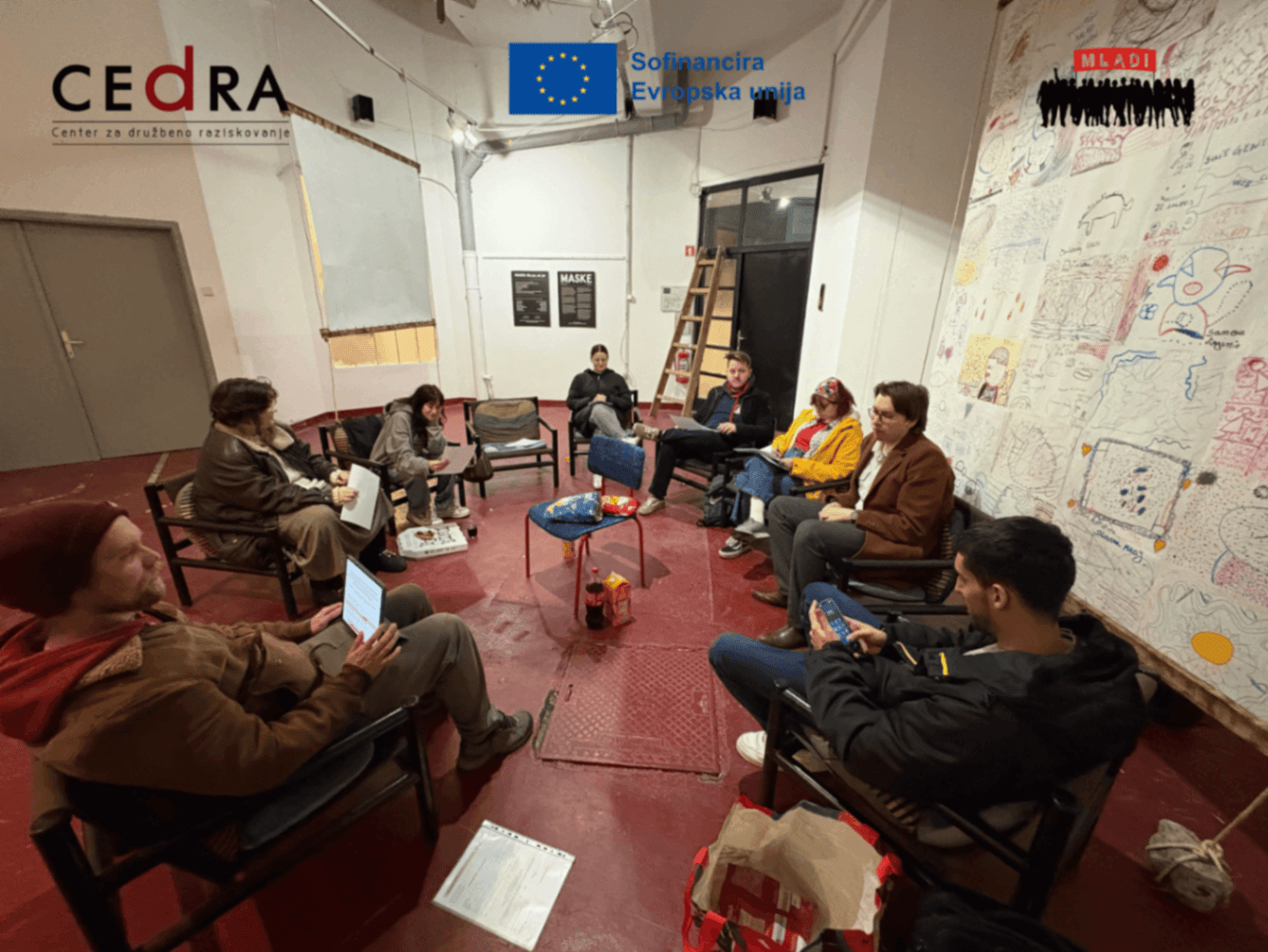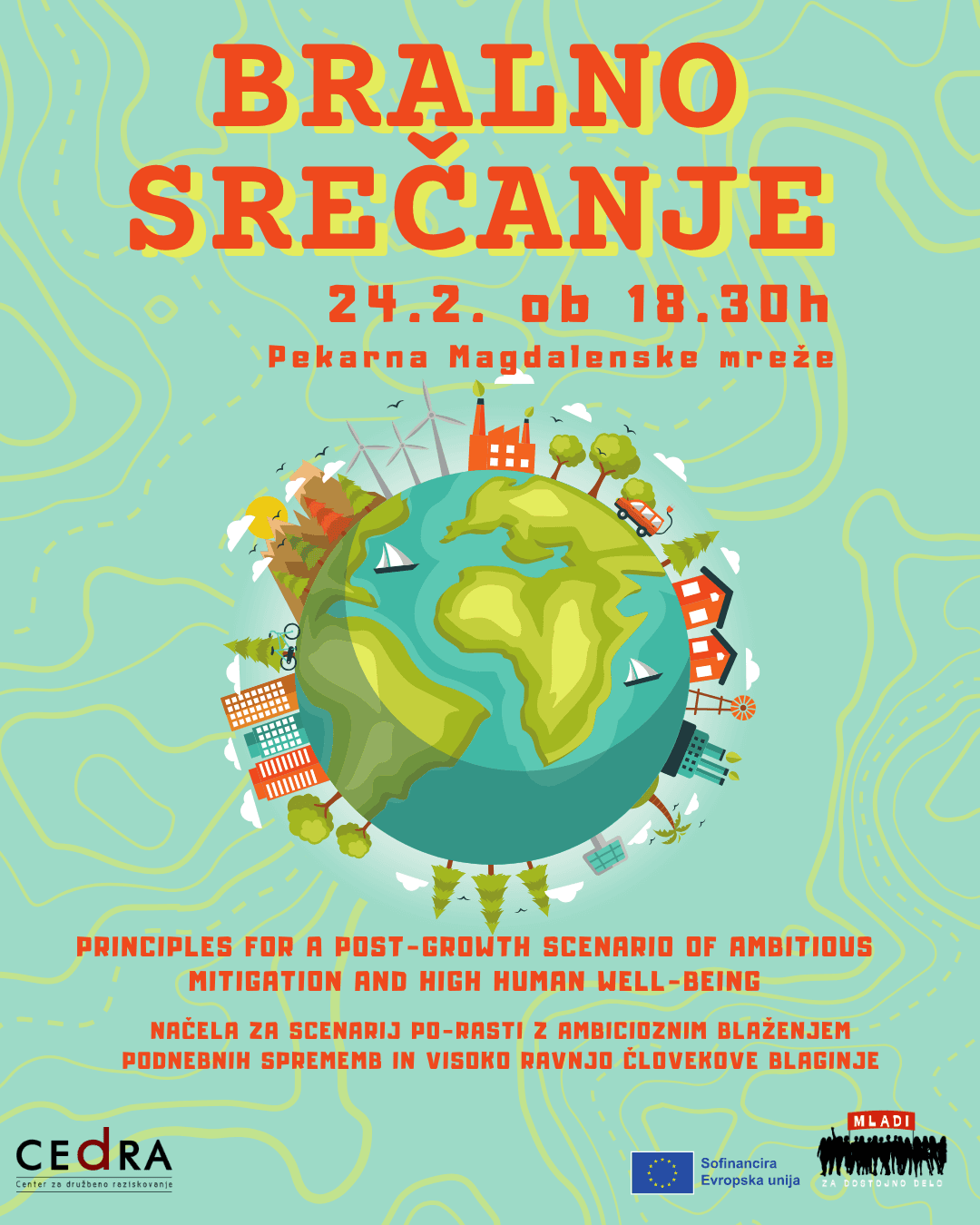
Group reading: “Principles for a post-growth scenario of ambitious mitigation and high human well-being.”
Activity Report
Activity Report
Event Report: Reading Session – Principles for a Post-Growth Scenario with Ambitious Mitigation and High Human Well-Being
Date: 24 February 2026
Context: Erasmus+ project Youth for Decent Work, the Common Good and the Environment (KA145)
Location: Pekarna Magdalenske mreže, Ob železnici 6, 2000 Maribor
1. Description of the Activity
As part of the project, we organised a reading session focusing on the article Principles for a Post-Growth Scenario with Ambitious Mitigation and High Human Well-Being. The session was designed to deepen participants' understanding of the concept of post-growth and its relevance to addressing the climate crisis while ensuring high levels of human well-being.
Participants read the text before the session, allowing the activity to focus primarily on collective interpretation, clarification of more complex concepts and in-depth discussion. Particular attention was paid to the critique of economic models that closely associate social well-being with continuous economic growth.
We then explored alternative approaches that place the satisfaction of human needs, a more equitable distribution of resources and respect for ecological limits at the centre of economic and social development. Participants discussed concepts such as sufficiency, inequality, the equitable distribution of resources, and the possibility of redirecting the economy towards meeting social needs.
2. Purpose of the Activity
The objectives of the reading session were:
- to introduce young people to the concept of post-growth and its fundamental principles,
- to encourage critical reflection on the relationship between economic growth and human well-being,
- to deepen understanding of the connections between economic systems, the climate crisis and social inequalities,
- to introduce the concepts of sufficiency, equitable resource distribution and the satisfaction of social needs,
- to explore possibilities for ensuring high levels of well-being while reducing the use of energy and natural resources,
- to develop participants' ability to critically read and analyse complex economic, social and environmental issues.
3. Process and Youth Participation
The reading session was structured into several interconnected sections:
a) Reading and Collective Interpretation of the Text
Before the session, participants read the selected text on a post-growth scenario. At the beginning of the meeting, they presented their understanding of the text, highlighted its key arguments and raised questions and uncertainties that emerged during their reading.
Together, we clarified more complex concepts and compared different interpretations, enabling participants to actively contribute to developing a shared understanding of the topic.
b) Economic Growth and Human Well-Being
An important part of the discussion focused on the relationship between economic growth and human well-being. Participants critically examined the assumption that increases in economic production and gross domestic product automatically lead to improvements in quality of life.
We discussed other factors that influence human well-being, including access to quality public services, housing, healthcare, education, decent work, leisure time and a healthy living environment.
c) The Climate Crisis and Ecological Limits
The discussion then connected these questions with the climate crisis and the finite nature of natural resources. Participants considered whether continuous increases in material production and consumption can be maintained while reducing environmental pressures at the speed required to address the climate crisis.
Particular attention was paid to how societies could ensure high levels of human well-being while reducing energy and natural resource use.
d) Inequality, Sufficiency and Equitable Distribution
Another central topic was the role of social and economic inequalities. Participants reflected on how unequal distributions of income, wealth and resources affect environmental pressures and people's opportunities to live dignified lives.
We discussed the concept of sufficiency and considered how a more equitable distribution of existing resources could help ensure high levels of well-being without requiring continuous increases in overall material consumption.
e) Alternatives and Group Reflection
In the final part of the session, participants considered possibilities for organising the economy and society differently. They discussed how economic activity could be directed more explicitly towards meeting social needs, ensuring decent work and improving quality of life while respecting ecological limits.
The group reflection enabled participants to connect theoretical concepts with current social and environmental challenges and to consider the changes that may be required to build a more just and environmentally sustainable society in the long term.
4. Achieved Results
The activity was evaluated through a questionnaire and group reflection. Participants assessed their understanding of the concept of post-growth, the relationship between economic growth and human well-being, the connections between inequality and the climate crisis, the relevance of the topics discussed, and the activity's contribution to the development of critical thinking.
The average scores on a five-point scale were:
- understanding of the concept of post-growth: 4.6 / 5,
- understanding of the relationship between growth and well-being: 4.7 / 5,
- understanding of inequality and the climate crisis: 4.7 / 5,
- relevance of the topics discussed: 4.6 / 5,
- contribution to the development of critical thinking: 4.8 / 5.
Participants particularly highlighted that the session encouraged them to question the often taken-for-granted assumption that economic growth automatically leads to a better life. An important insight was that high levels of human well-being can be compatible with lower resource use if resources are distributed more equitably and economic activity is more directly oriented towards meeting social needs.
Another important outcome was a deeper understanding of the relationship between social inequalities and the climate crisis, as well as the recognition that long-term solutions to environmental problems also require broader systemic changes.
The activity therefore contributed to:
- a better understanding of the concepts of post-growth and sufficiency,
- critical reflection on the relationship between economic growth and human well-being,
- a deeper understanding of the connections between the economy, inequality and the climate crisis,
- an understanding of the importance of equitable resource distribution,
- the development of critical thinking about dominant economic models,
- reflection on alternative ways of organising the economy and society.
5. Learning Outcomes and Contribution to the Project Objectives
The reading session made an important contribution to the objectives of the project by enabling young people to explore in depth the connections between economic systems, human well-being, social inequalities and ecological limits.
In terms of knowledge, participants deepened their:
- understanding of the concepts of post-growth and sufficiency,
- knowledge of the connections between economic systems and climate change,
- understanding of the distinction between economic growth and human well-being,
- understanding of the role of social and economic inequalities in environmental problems,
- knowledge of alternative approaches that emphasise meeting human needs and distributing resources more equitably.
In terms of skills, participants developed their:
- ability to critically read and interpret complex texts,
- ability to analyse economic, social and environmental concepts,
- ability to critically evaluate dominant economic assumptions,
- ability to connect theoretical concepts with current social and environmental problems,
- ability to participate in an in-depth group discussion and formulate reasoned arguments.
In terms of attitudes and behaviour, the activity contributed to:
- greater openness to considering alternative social and economic models,
- increased awareness of issues of social justice and the environment,
- the development of a critical approach to dominant economic narratives,
- greater awareness of the connections between the organisation of the economy, human well-being and ecological limits,
- increased motivation for further learning and engagement with social and environmental issues.
The activity therefore directly supported the objectives of the Erasmus+ project Youth for Decent Work, the Common Good and the Environment by connecting questions of human well-being, decent living conditions, social justice and environmental sustainability, while enabling young people to critically reflect on possibilities for a more just social and economic system.
Gallery