Film Evening on Workers' Rights, Decent Work and the Common Good – The insider
Activity Report
Activity Report
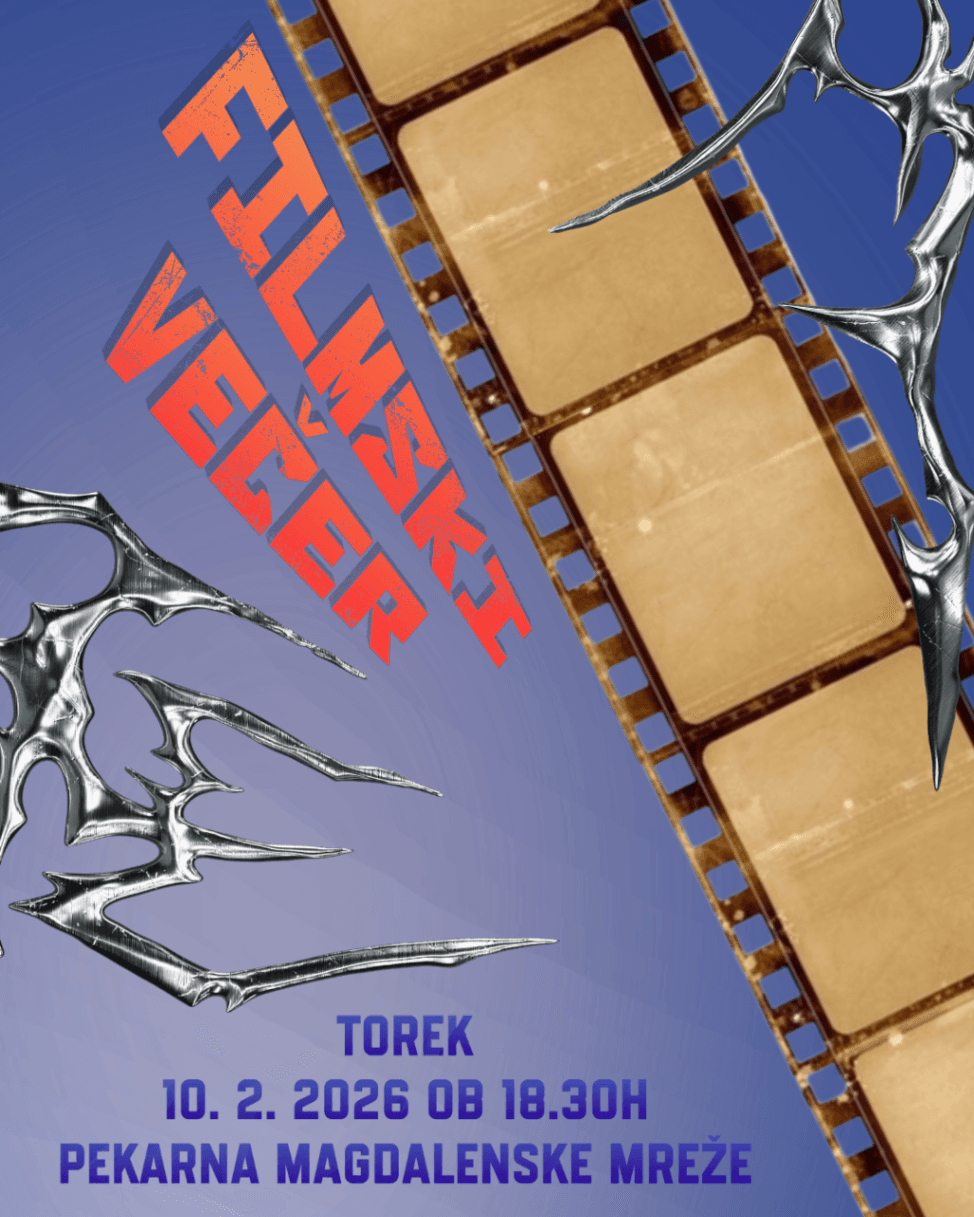
Event Report: Film Evening on Workers' Rights, Decent Work and the Common Good – The insider
Date: 27 January 2026
Context: Erasmus+ project Youth for Decent Work, the Common Good and the Environment (KA145)
Location: Pekarna Magdalenske mreže, Maribor
1. Description of the Activity
As part of the project, we organised the second event in our series Film Evenings on Workers' Rights, Decent Work and the Common Good. The activity focused on workers' rights, social responsibility and the impact of economic and social structures on individuals and their everyday lives.
The film screening provided a starting point for collective reflection and in-depth discussion. Following the screening, participants took part in a moderated discussion in which they identified the film's key themes and questions and connected them with contemporary social and economic processes.
The discussion focused particularly on corporate responsibility, the influence of capital and economic interests on society, the position of individuals within broader social structures, and possibilities for collective responses to systemic problems. Participants also connected the themes presented in the film with their own experiences and examples from the contemporary world of work.
2. Purpose of the Activity
The objectives of the film evening were:
- to use film as a medium to introduce young people to issues related to workers' rights, decent work and social responsibility,
- to deepen their understanding of social and economic processes that influence the position of individuals,
- to encourage reflection on the influence of capital, companies and other institutions on society,
- to develop participants' ability to critically analyse media and cultural content,
- to create a space for informed and reasoned discussion of complex social issues,
- to encourage reflection on the importance of solidarity and collective action in responding to systemic problems.
3. Process and Youth Participation
The film evening was structured into several interconnected sections:
a) Introduction and Presentation of the Topic
Before the screening, participants were introduced to the main theme of the film evening and to questions they could consider while watching the film. The film was placed within the broader context of the project and its themes related to decent work, workers' rights, social inequalities and the common good.
b) Film Screening
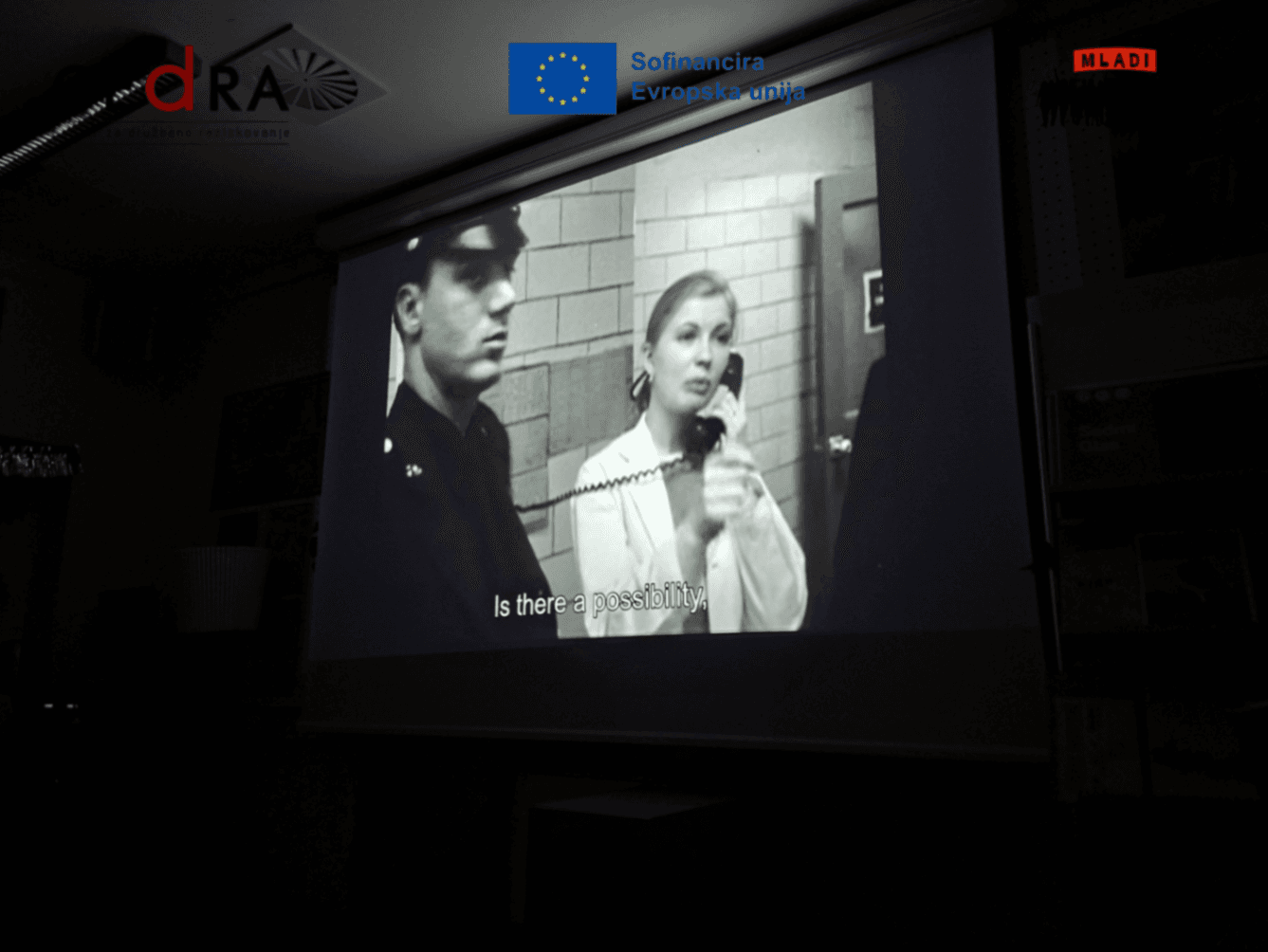
Participants watched the film together, using it as a starting point for further discussion of social and economic processes. Film as a medium enabled participants to approach complex issues through concrete situations, relationships and dilemmas and to connect them with broader social structures.
c) Analysis of Key Themes
Following the screening, participants identified scenes, themes and questions they considered particularly important. Together, we analysed different interpretations and discussed the relationships between individual actions, institutions and broader economic and social structures.
d) Capital, Social Responsibility and the Position of the Individual
The central part of the moderated discussion focused on the influence of capital and economic interests on social relations, as well as the responsibility of companies and institutions.
Participants reflected on the extent to which individuals are able to change their position within broader social structures and how systemic circumstances influence their choices, work and everyday lives.
e) Collective Action and Group Reflection
In the final part of the event, the discussion turned towards possible responses to social and economic problems. Particular attention was paid to cooperation, solidarity and collective action.
Participants connected the themes of the film with their own experiences and current social issues and reflected on the possibilities available to individuals and communities for acting collectively and contributing to social change.
4. Achieved Results
The activity was evaluated through a questionnaire and group reflection. Participants assessed the contribution of the film evening to their understanding of social and economic processes, the relevance of the topics discussed, their understanding of the influence of capital and institutions, the development of critical thinking, and the quality of the group discussion.
The average scores on a five-point scale were:
- understanding of social processes: 4.6 / 5,
- relevance of the topics: 4.6 / 5,
- understanding of the influence of capital: 4.5 / 5,
- contribution to the development of critical thinking: 4.7 / 5,
- quality of the group discussion: 4.7 / 5.
Participants particularly highlighted that the activity helped them develop a better understanding of the broader social context and the complexity of the relationships between individuals, institutions and social structures. The film and subsequent discussion enabled them to connect more abstract social questions with concrete situations and experiences.
Participants also identified critical thinking and collective action as important responses to problems with broader systemic causes.
The activity therefore contributed to:
- a better understanding of social and economic processes,
- a deeper understanding of the influence of capital and economic interests on society,
- a greater understanding of the relationship between the position of individuals and broader social structures,
- the development of critical analysis of film and other media content,
- connecting the issues discussed with concrete examples and experiences,
- reflection on the importance of solidarity and collective action.
5. Learning Outcomes and Contribution to the Project Objectives
The film evening made an important contribution to the objectives of the project by enabling young people to use film and group discussion to deepen their understanding of social and economic processes and develop a critical approach to contemporary social issues.
In terms of knowledge, participants deepened their:
- understanding of social and economic processes,
- knowledge of the influence of capital and economic interests on society,
- understanding of the relationships between individuals, companies, institutions and broader social structures,
- understanding of ethical dilemmas related to work, social responsibility and economic activity.
In terms of skills, participants developed their:
- ability to critically analyse film and media content,
- ability to identify the broader social context of concrete events and situations,
- ability to engage in informed and reasoned discussion of complex social issues,
- ability to connect theoretical concepts with concrete examples and their own experiences,
- ability to listen, reflect and engage with different perspectives.
In terms of attitudes and behaviour, the activity contributed to:
- greater awareness of social problems and inequalities,
- greater willingness to participate in discussion and critical reflection,
- the development of a critical approach to social and economic structures,
- greater openness to solidarity and collective action,
- greater awareness of the role young people can play in understanding and shaping social change.
The activity therefore directly supported the objectives of the Erasmus+ project Youth for Decent Work, the Common Good and the Environment, particularly by promoting critical thinking, an understanding of the world of work and social inequalities, and young people's willingness to participate actively and collectively in society.
Gallery