.png&w=3840&q=75)
Climate Workshop – Decent Work and Environment
Activity Report
Event Report: Environmental Workshop – Decent Work and the Environment
Date: 12 November 2025
Context: Erasmus+ project Youth for Decent Work, the Common Good and the Environment (KA145)
Location: Pekarna Magdalenske mreže, Maribor
1. Description of the Activity
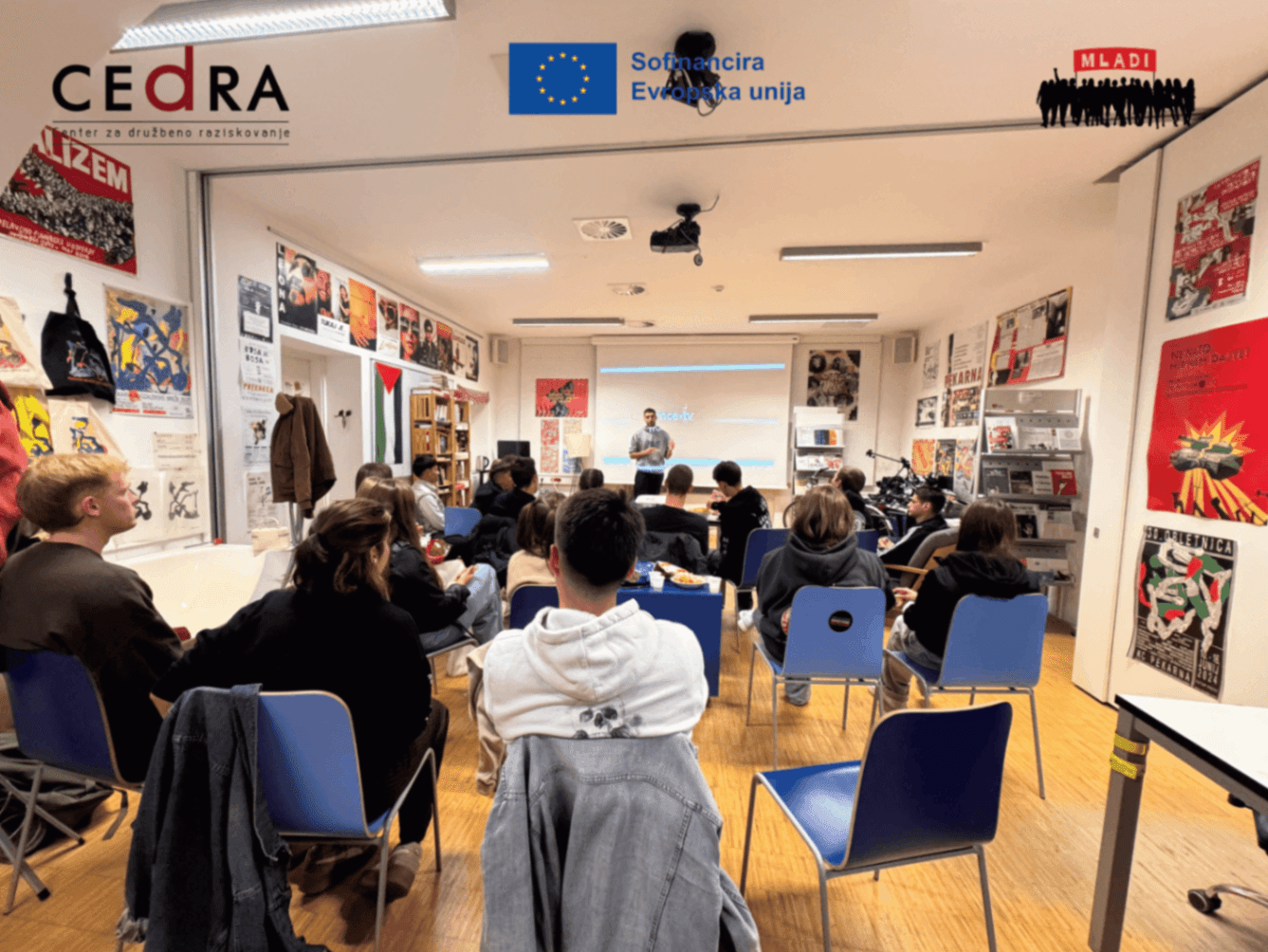
As part of the project, we carried out an educational workshop on Decent Work and the Environment, following the materials and content developed within the project team. The aim of the workshop was to strengthen the participants’ understanding of climate (in)justice, its origins and consequences, as well as the links between environmental challenges, workers’ rights and social justice.
In the introductory part, participants were introduced to the basic concepts of the climate crisis, planetary boundaries and current climate impacts in Slovenia. This was followed by an overview of key systemic causes, focusing particularly on the role of the capitalist economic system, unlimited growth and pressures on natural resources.
The second part of the workshop addressed global and social inequalities—both between countries and within populations. Special emphasis was placed on the fact that the consequences of climate breakdown are not distributed evenly and that the most vulnerable communities are often the most affected.
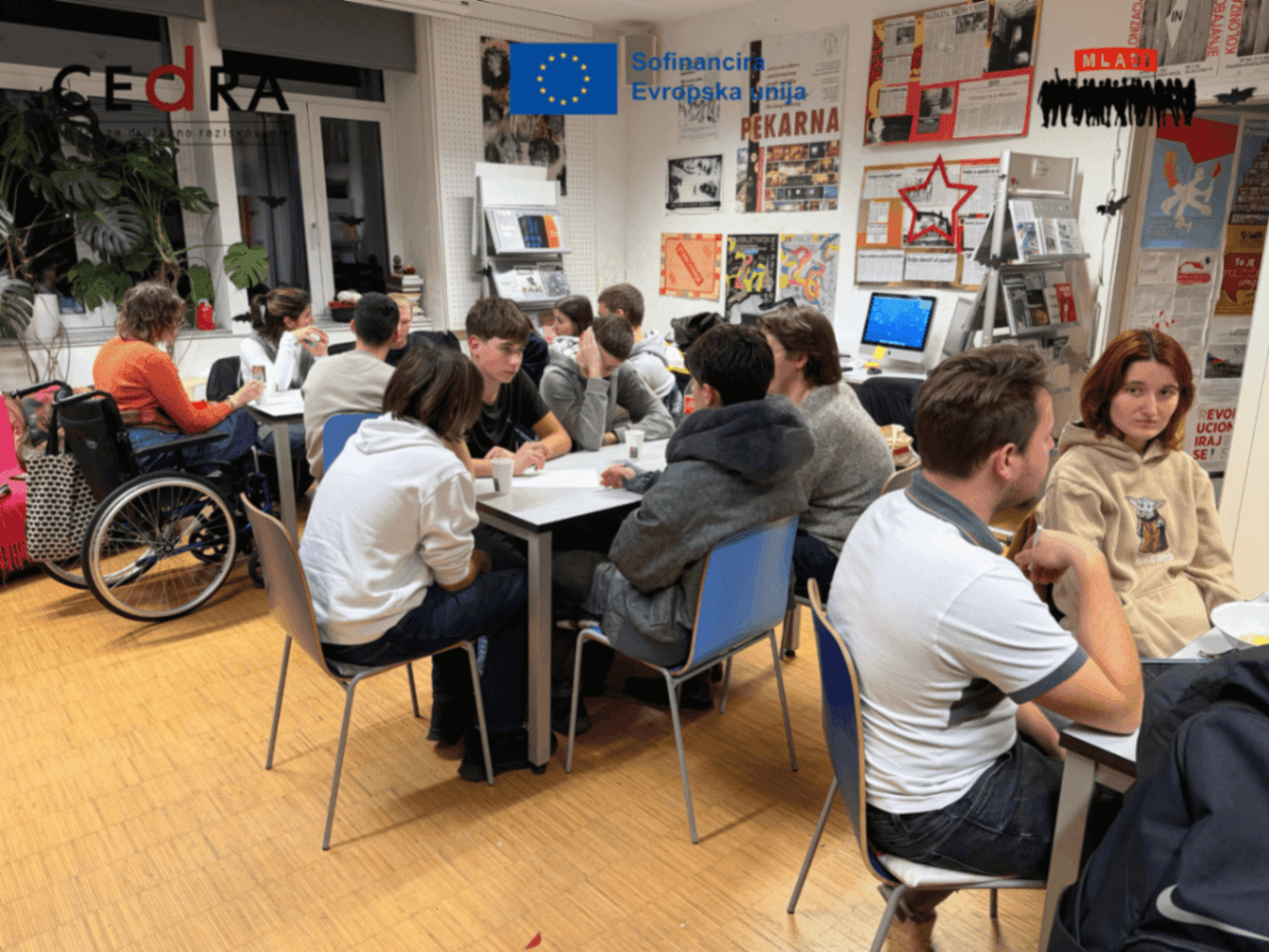
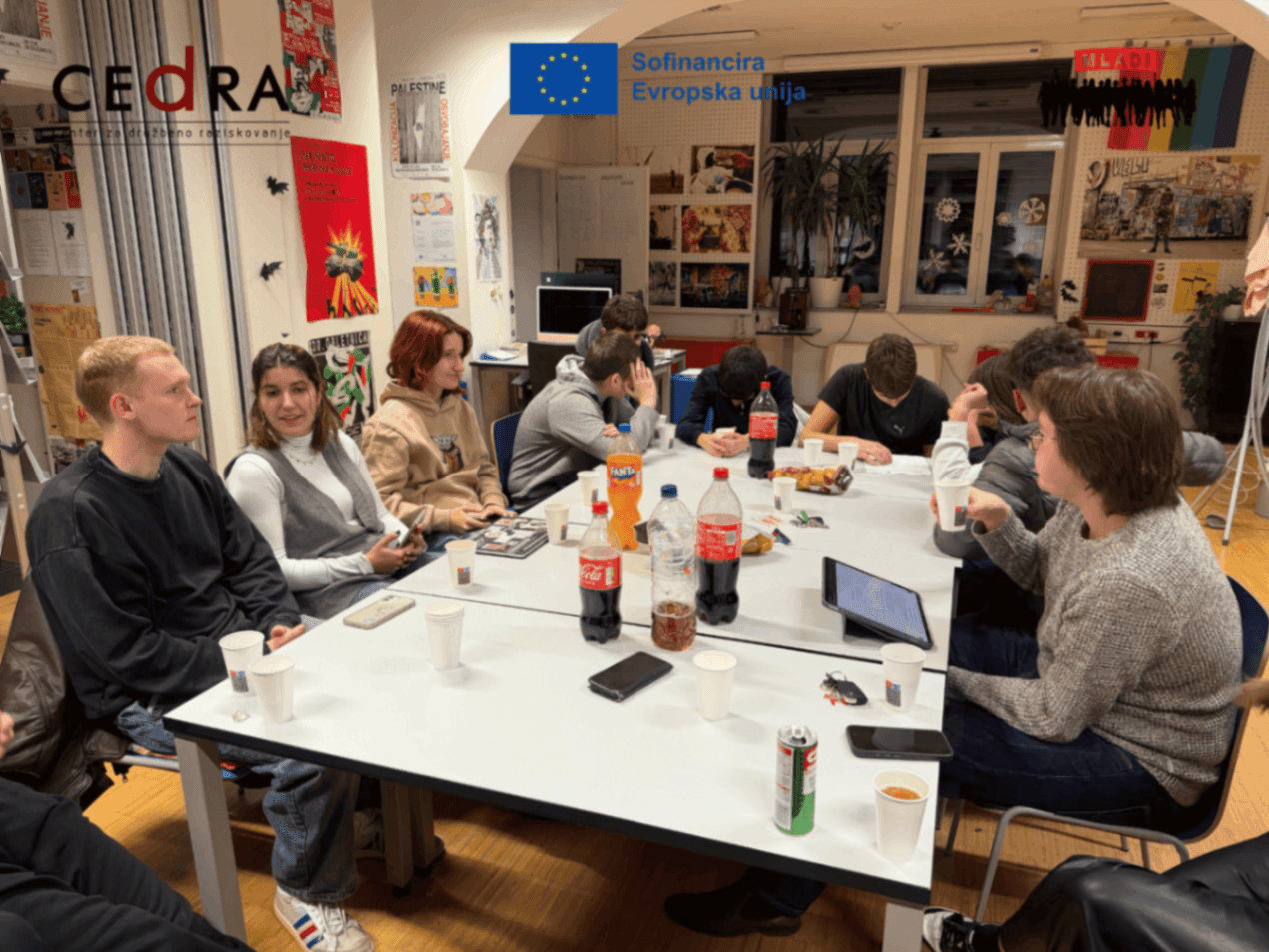
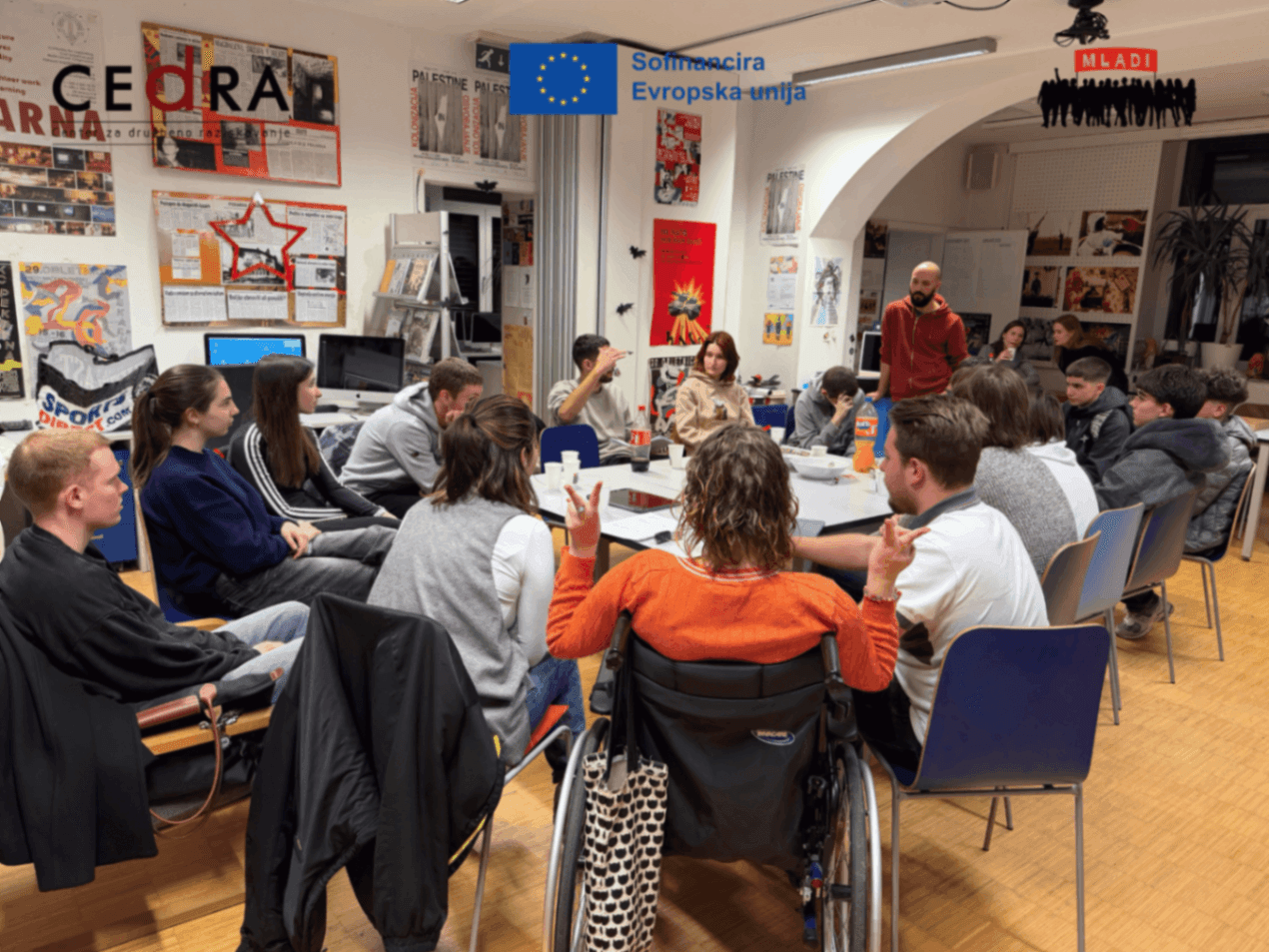
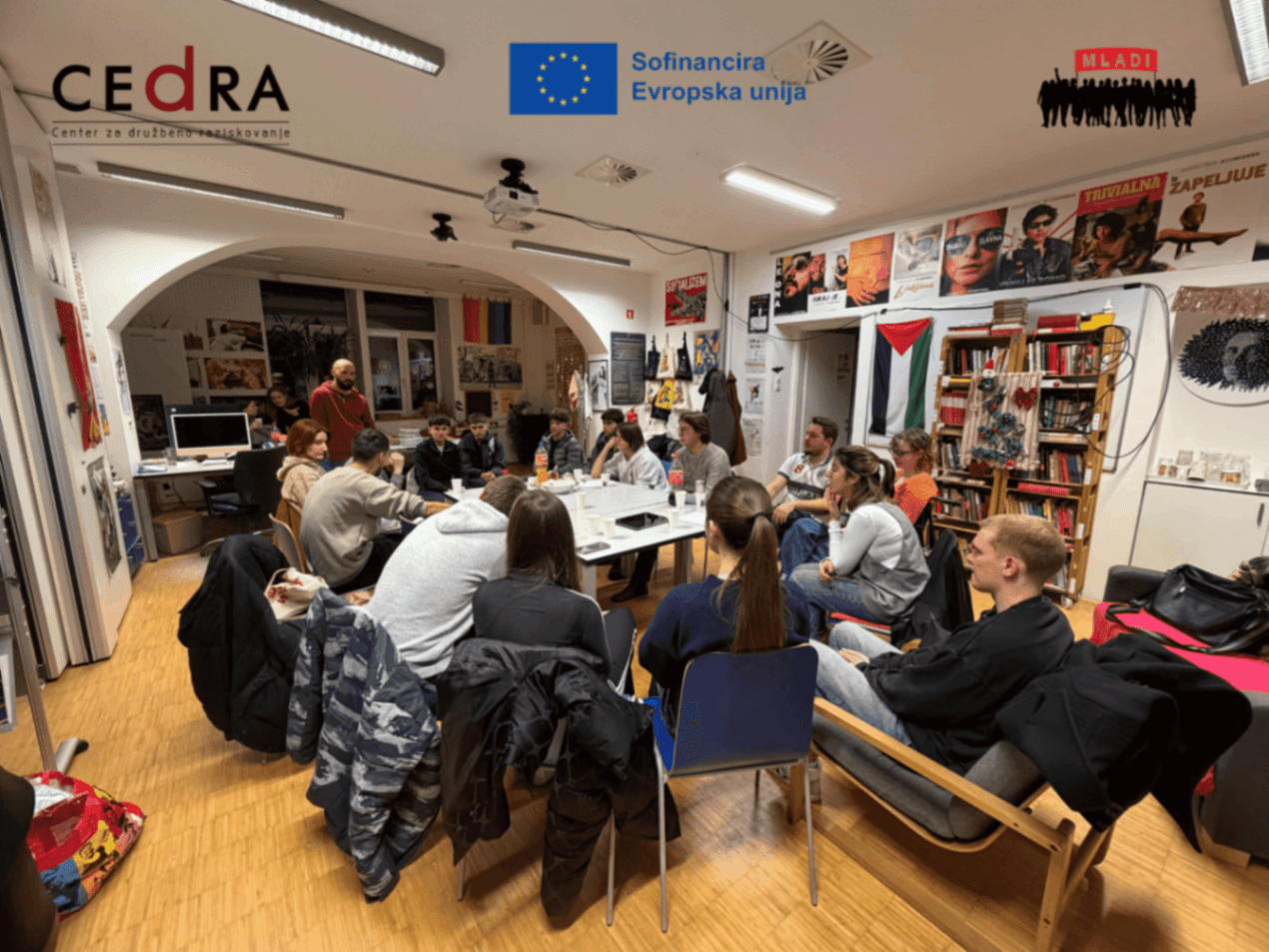
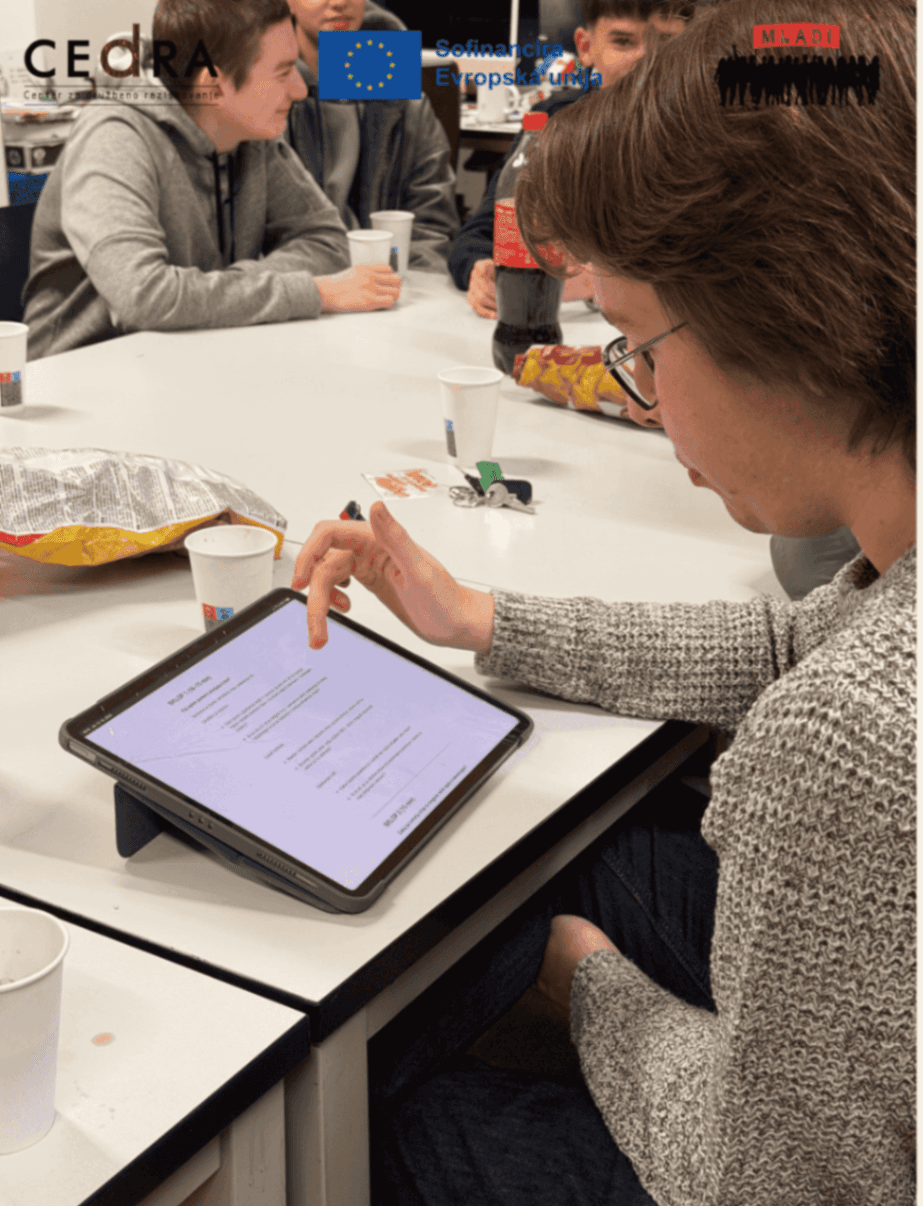
The closing part was dedicated to climate justice, systemic change and the role of active citizenship. The workshop was highly interactive—participants engaged in group discussions and completed a practical exercise identifying local environmental and social issues.
2. Purpose of the Activity
The goals of the workshop were to:
- present to young people the connections between climate change, the economic system and social justice,
- explain why the climate crisis is not only an environmental issue but a deeply systemic one,
- strengthen the understanding of decent living conditions within ecological limits,
- encourage reflection on the role of young people in social and environmental change,
- open space for considering possibilities for active involvement in local environmental and social initiatives.
3. Process and Youth Participation
The workshop was structured into several thematic sections:
a) Introduction – Planetary Boundaries and Environmental Crises
Participants were introduced to the concept of planetary boundaries, key exceeded limits (climate change, biodiversity loss) and the impacts of ecological breakdown in Slovenia, including heatwaves, ecosystem degradation and impacts on agriculture.
b) Systemic Causes – The Economy of Profit and Endless Growth
Participants learned about the logic of competitive market systems, pressures on environmental standards and the reasons why companies often avoid the costs of environmental protection. A key insight was that climate change results from economic structures rather than purely natural processes.
c) Inequalities – Who Is Responsible and Who Is Most Affected?
The discussion addressed global emission disparities, the disproportionate share of emissions produced by the wealthiest, and differences in impacts on populations of wealthy countries versus those in the Global South. Young participants connected these concepts to examples from their own communities.
d) Climate Justice and Social Alternatives
The group focused on questions of a just societal transition, the development of public and community services, and the role of activism in systemic change. Attention was given to the idea of a society based on meeting human and planetary needs instead of profit-driven logic.
e) Group Work – Local Issues and Opportunities for Action
In the final segment, participants worked in small groups to identify the most pressing environmental and social issues in Maribor and considered possible forms of local organising and action. Feedback showed a high level of engagement and interest.
4. Results Achieved
The workshop contributed to:
- a high level of participation and interest among young people,
- improved understanding of systemic environmental and social problems,
- development of knowledge related to climate justice and interconnected concepts,
- linking environmental issues with decent work, inequality and broader social structures,
- active identification of local problems and proposals for action,
- increased interest in engaging in initiatives such as climate strikes, youth organisations and community projects.
5. Learning Outcomes and Contribution to Project Goals
The workshop significantly contributed to the goals of the project by:
- strengthening critical thinking and systemic understanding of social processes,
- helping young people grasp the connections between decent work, ecological limits and social inequalities,
- improving their ability to analyse social and environmental structures,
- encouraging reflection on alternatives to the current economic model,
- increasing awareness of the role of young people in societal change,
- promoting the values of solidarity, justice and community care.
Gallery